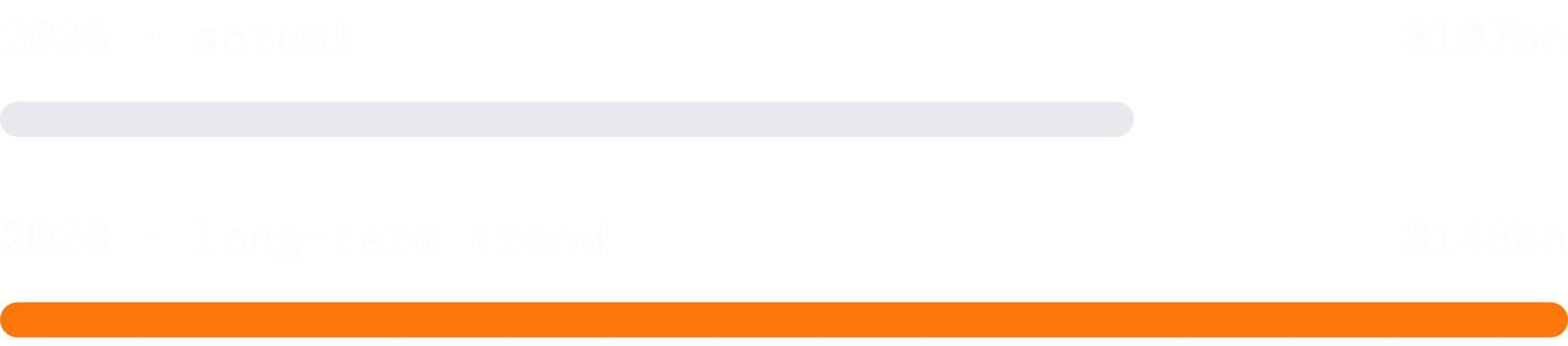
Driven by climate change and geopolitical instability, insured natural catastrophe losses keep climbing, while exposure data grows in volume and update frequency.
If 2026 follows the long-term average trend, insured losses will reach a new record.
Global insured nat-cat losses · USD
$148bn
Source: Swiss Re Institute, sigma research. 2026 = long-term trend estimate (sigma 1/2026).
WHAT INSURERS NEED
Sophisticated, real-time analytics at scale.
To respond to the changing risk landscape, carriers need analytical capability that can keep pace with the risk. That capability supports:
Underwriting agility
Sharper risk selection and better underwriting decisions at scale.
Rapid portfolio insight
Answers while catastrophes unfold, and the insight to rebalance effectively after the event.
Concentration risk
Identify and act on aggregation, tail and cross-class concentration risk.
Capital allocation
Drive more efficient allocation of capital across the book.
Treaty optimisation
Optimise treaty structures and pricing.
Regulatory reporting
Enhance regulatory reporting capabilities.
THE REALITY
Exposure processing is still slow, manual and error-prone.
Even as the most sophisticated (re)insurers invest in modern analytics to great effect, many organisations struggle to modernise their analytical capability. These are the blockers:
Legacy infrastructure
Siloed systems that are cumbersome to operate and hard to change, improve or scale.
Capacity constraints
Compute contention impairs the business at peak, when answers matter most.
Enterprise fragmentation
Disconnected teams build for individual needs, not common enterprise capabilities.
Skills & build risk
In-house platform builds are complex, expensive and risk-prone without deep technical capability.
Vendor platforms
Expensive, with lock-in and rigid ways of working.
Cost concerns
High-scale cloud compute is costly when it isn’t managed and optimised.
The bottom line
Manual processing and spreadsheet-based analytics and reporting will no longer be tenable as climate-related perils increase in both frequency and severity.
INTRODUCING TEMPO
Massive-scale modelling, operated by your own team.
Tempo is a portable high-throughput compute (HTC) platform, optimised for the (re)insurance industry. It delivers efficient, performant execution at scale, so you can modernise and consolidate disparate analytical jobs into one centralised capability.
Exposure aggregation & rollup
Apply contract terms, FX, retrocession and views of risk across thousands of treaties and millions of simulations. Run portfolio rollups and on-demand pricing.
Financial scenario modelling
Run multiple what-if scenarios across portfolios, apply IFRS 17 measurement under each scenario, and aggregate to entity level.
Multi-dimensional portfolio analytics
Exposure reporting across geography, peril and class, plus bulk reserve recalculation after an assumption change.
Retrocession & capital modelling
Apply ceded structures to gross losses and run capital adequacy under stress scenarios.
Ad-hoc analysis
A risk officer asks what a 1-in-500 wildfire year does to the capital position, and gets the answer on demand.
AI-enabled analytics
Analysis of claim narratives across the back-book, plus fraud-pattern batch analytics on unstructured data.
HOW IT WORKS
Submit work. Receive results.
01 · SUBMIT
Your workflow, as is
A graph of jobs and dependencies: a rollup, a scenario set, a capital run. No infrastructure code.
02 · TEMPO EXECUTES
Any infrastructure, one engine
Dispatches up to 100,000 tasks per second across laptop, on-prem and cloud. It retries failures, recovers from crashes in seconds and scales to zero.
03 · RESULTS
Reproducible & auditable
Every run is repeatable and traceable, with full cost transparency per run.
WHY CHOOSE TEMPO?
Built for industry needs.
Tempo is designed around the realities of (re)insurance modelling: strict compliance, renewal peaks and lean modelling teams.
Any scale. Anywhere.
Tempo runs on a laptop, on-premises clusters or in the cloud (AWS, Azure, GCP), meeting data-residency requirements, regulatory commitments and multi-cloud strategies. As input volumes grow, it scales to massive throughput with blazing performance.
Plug & play
Designed for low-risk enterprise adoption. Integration happens at the workflow boundary: submit work, receive results. Tempo needs no direct access to other systems, so data governance stays unchanged. Every run is reproducible and auditable for Solvency II, IFRS 17 and internal audit.
Operated by your team
Your modelling or analytics team runs it: two or three engineers alongside their other work, not a dedicated platform group. Go from an experimental what-if analysis or a regulatory question to a production report in days, not weeks.
Cost efficient & transparent
Tempo schedules work to optimise for cost or performance and scales to zero when idle, so there are no always-on clusters for bursty periods like renewals. Schedule work across clouds for the best price-performance, with full cost transparency and predictive pricing per run.
See Tempo in action.
Book a demo, or reach out to talk through your modelling workloads with our team.